Editorial · The hall of fame
The 10 Most Iconic Apple Computers
Forty-odd years and 385 machines later, these are the ten I’d grab first if the building were on fire. A couple changed computing for good. A couple nearly sank the company. One came out of a manila envelope. Here’s the case for each.
01 · The Garage Era · 1976
Apple I
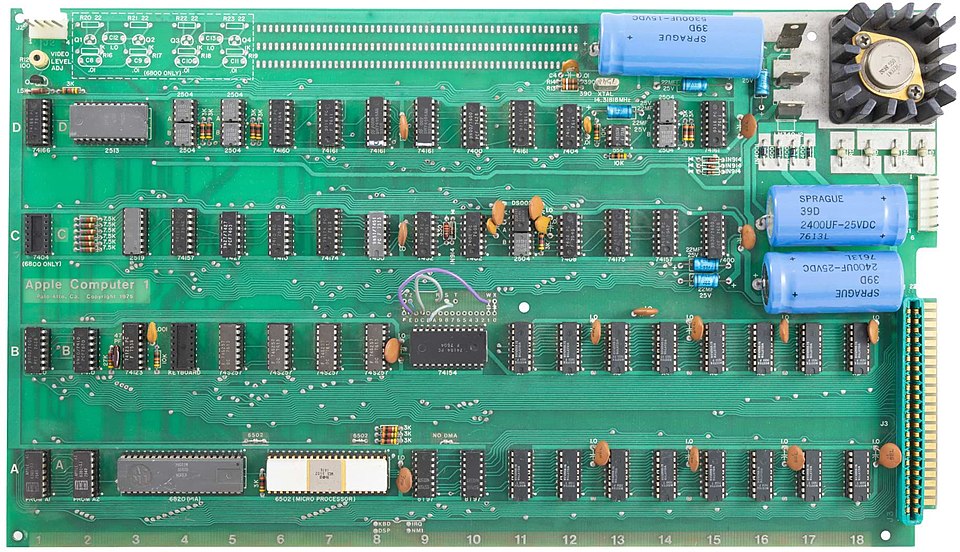
Calling it a computer is generous. The Apple I was a bare circuit board: no case, no keyboard, no monitor, no power supply, all of which you sorted out yourself, or you didn't, and good luck. Wozniak built it to show off at Homebrew Computer Club meetings, and Jobs was the one who decided they should sell it. They landed on a price of $666.66, partly because Woz liked repeating digits and partly because it was a tidy markup over the cost of the parts. Around 200 were made, a good chunk of them assembled by hand in the Jobs family garage. The survivors now go at auction for more than most houses.
Full specs & history →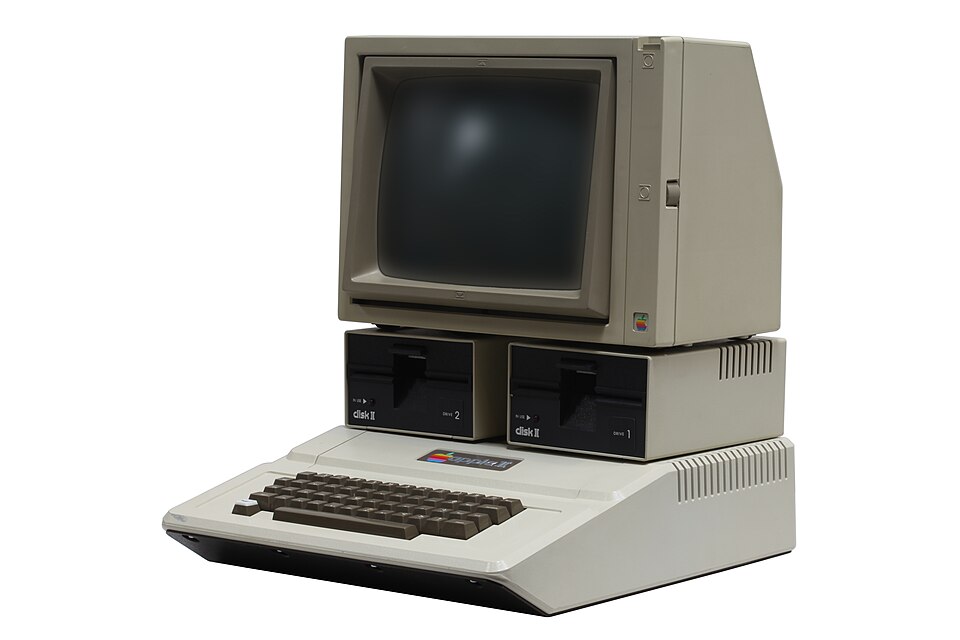
02 · The Garage Era · 1977
Apple II
If the Apple I was a hobby, the Apple II was a real business. It showed up in 1977 in an actual moulded case, with colour graphics and sound, looking like something you'd happily leave out in the living room. The thing that truly sold it wasn't Apple at all. It was VisiCalc, the first spreadsheet, which handed people who couldn't care less about computers a concrete reason to want one. Accountants started buying Apple IIs just to do their books. It made the money that kept the lights on long enough for Apple to invent the Macintosh, and it stayed on sale, in one form or another, until 1993. Sixteen years. Try getting that out of a laptop now.
Full specs & history →
03 · The Beige Era · 1984
Macintosh 128K
Plenty of people met the Macintosh before they ever touched one, by way of a sledgehammer. Ridley Scott's "1984" commercial ran once, during the Super Bowl, and then basically never aired again. Days later the real thing turned up: a little beige box with a carrying handle, a nine-inch screen, and this odd thing called a mouse, that booted up and smiled at you. It was the first time ordinary people got windows and icons and clicking instead of typing commands at a blinking prompt. The catch was right there in the name. 128K of memory was tight even in 1984, so it could really crawl. Nobody cared. Almost everything you click on today started in that box.
Full specs & history →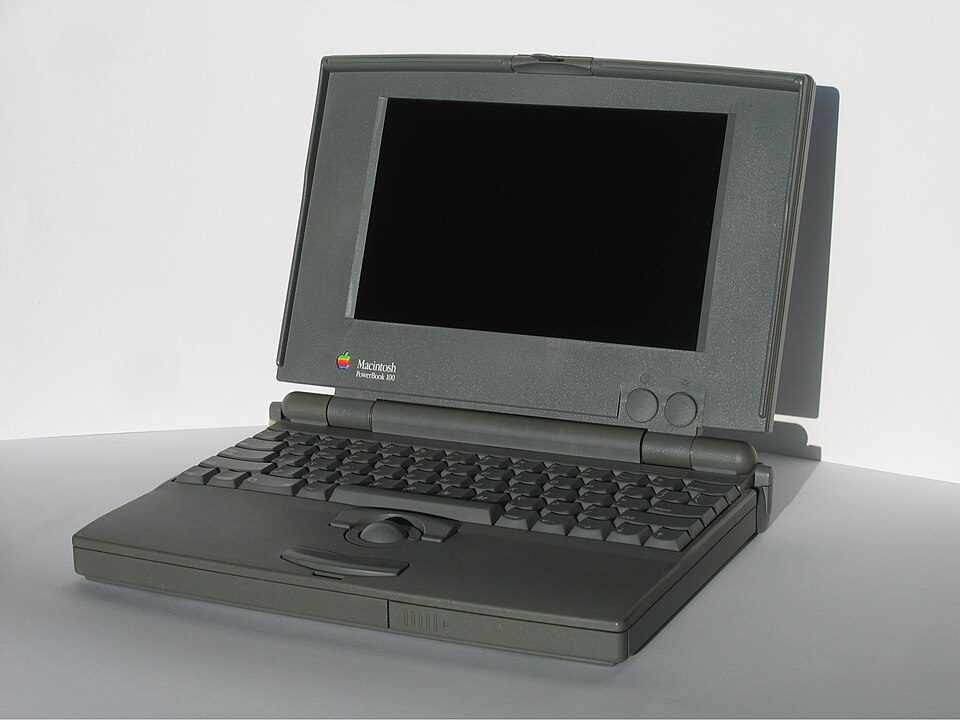
04 · The Beige Era · 1991
PowerBook 100
This is the quiet one that shaped every laptop you've ever used. Before it, portable computers jammed the keyboard against the front edge and left your wrists dangling off the desk. Apple, with Sony actually doing the manufacturing, pushed the keyboard back and opened up room for your palms, with the pointing device parked in the middle. Palmrests, pointer in the centre: that layout is now so normal you've never thought to question it. The funny part is the PowerBook 100 was the cheap little sibling of the three models Apple launched that morning, and the one that ended up mattering most. Whatever laptop you own is its grandkid.
Full specs & history →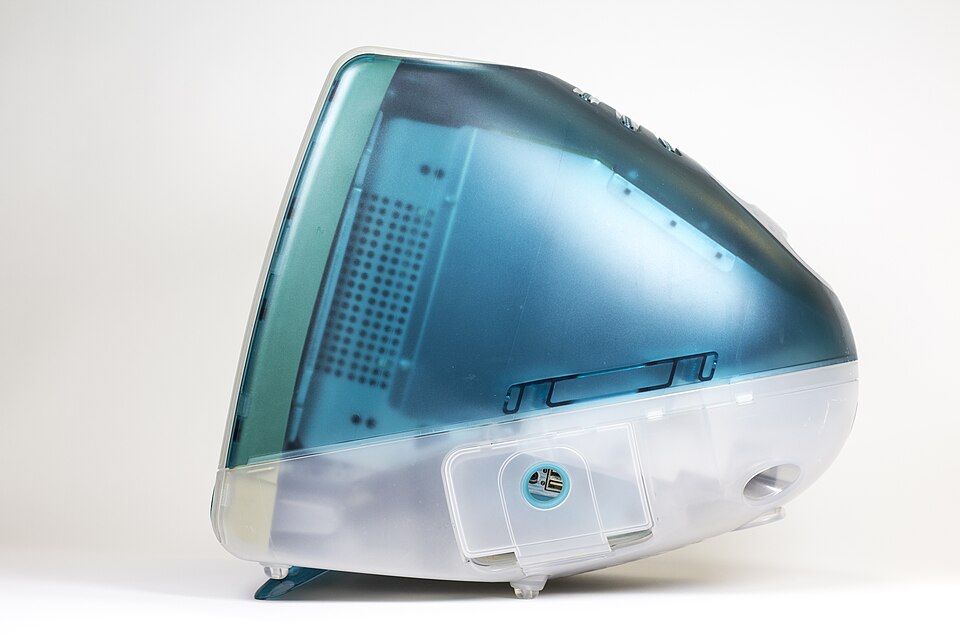
05 · The Translucent Revolution · 1998
iMac G3
When Steve Jobs came back, Apple was reportedly about ninety days from running out of cash. The iMac was his answer, and it was a strange-looking one: a translucent Bondi-Blue blob you could see straight into, shaped like a cheerful little TV. In one move it binned the floppy drive and every familiar port and bet the whole thing on USB, which plenty of people called reckless and which the entire industry then copied. The "i" stood for internet. The promise was that your grandmother could lift it out of the box and be online in ten minutes, and she could. It sold by the truckload, made computers fun to look at again, and hauled Apple back from the edge.
Full specs & history →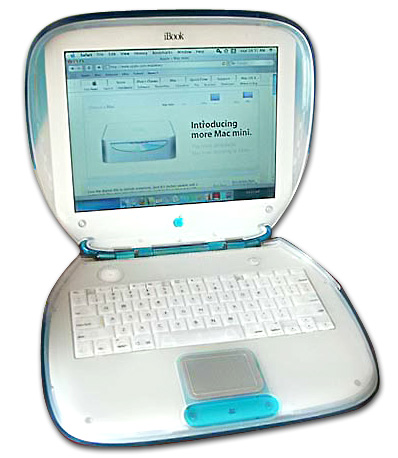
06 · The Translucent Revolution · 1999
iBook G3 (Clamshell)
Apple more or less asked what the iMac would be if it went off to college, then built it. The iBook was a chunky, rubber-edged clamshell with a handle moulded into it, in Blueberry and Tangerine, that half the world affectionately called the toilet seat. The looks were the least interesting part. It was the first laptop you could buy with wireless built in, and at the launch Jobs picked one up and passed it through a hula hoop to prove there were no cables running to it. For a lot of people watching, that was the moment they understood what Wi-Fi even was. The whole idea of unplugging your computer from the wall more or less starts here.
Full specs & history →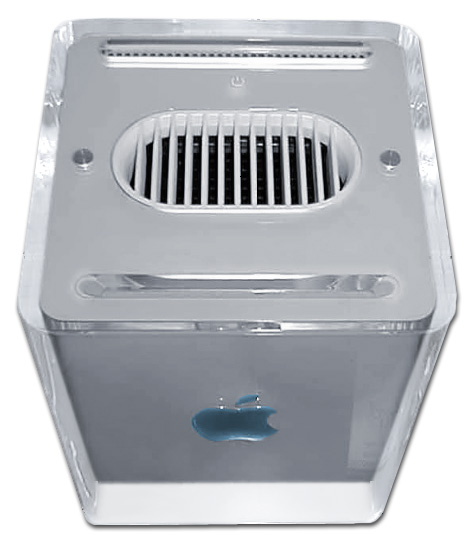
07 · The Translucent Revolution · 2000
Power Mac G4 Cube
The Cube is the prettiest machine Apple ever sold and one of its great flops, which is an extremely Apple way to be remembered. It was an eight-inch cube of computer suspended inside a block of clear acrylic, with no fan and barely a button; you woke it with a tap. It was also expensive, and a lot of them shipped with faint hairline lines in the plastic that owners were convinced were cracks, and it sold so poorly that Apple quietly pulled it inside a year. And yet the Museum of Modern Art keeps one in its permanent collection. People still track down dead ones just to set them on a shelf and admire them.
Full specs & history →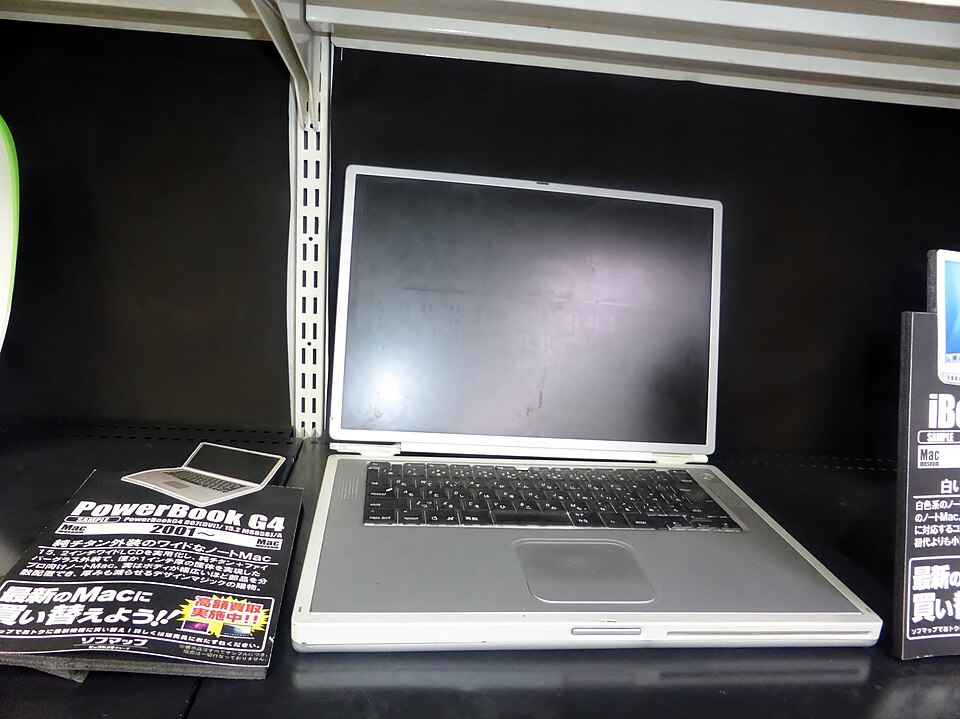
08 · The Digital Hub · 2001
PowerBook G4 (Titanium)
The TiBook is the moment Apple laptops started looking like Apple laptops. In 2001, when nearly every notebook was a fat grey plastic brick, Apple wrapped a widescreen display in actual titanium and got the whole thing down to about an inch thick. It genuinely looked like it had dropped in from a few years in the future. It wasn't flawless. The paint flaked off the edges if you breathed on it wrong, and the Wi-Fi antenna had to sit in a little plastic strip because metal blocks the signal. None of that stuck. It drew the blueprint that runs in a straight line to the MacBook Pro people use today.
Full specs & history →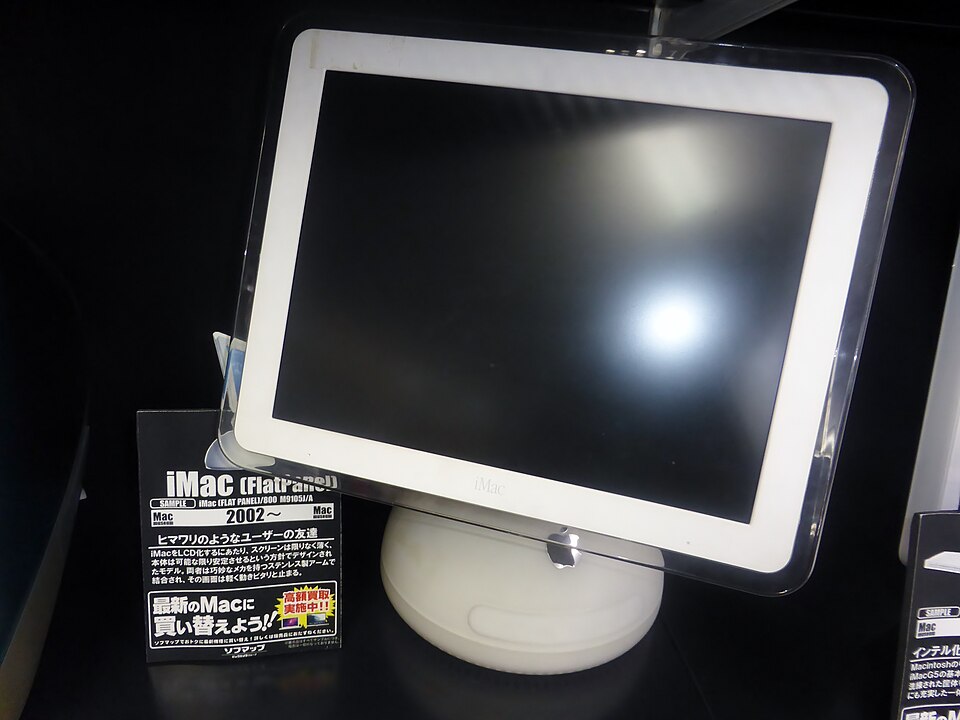
09 · The Digital Hub · 2002
iMac G4
On paper it was the iMac G4. Everyone called it the lamp, or the sunflower, because that's exactly what it was: a flat screen floating on a chrome neck out of a white half-dome. The clever bit was that neck. You could tilt the screen up, swing it down, nudge it sideways with one finger, and it would just hold there, perfectly balanced. Time ran it on the cover before it had even gone on sale. It might be the friendliest-looking computer anyone has built, and it has aged about as gracefully as a thing from 2002 possibly could.
Full specs & history →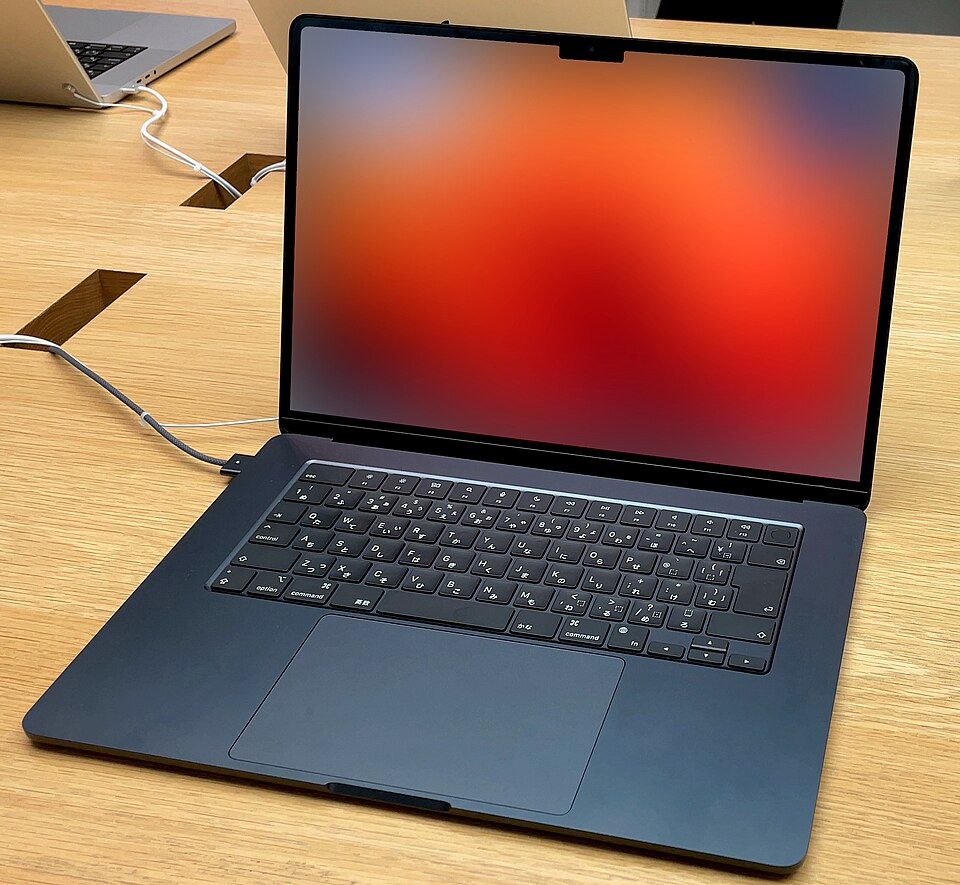
10 · The Aluminum Age · 2008
MacBook Air (1st gen)
The reveal is the part that stuck. Jobs walked on stage, picked up a plain manila office envelope, and slid a whole laptop out of it. That was the demo. The first MacBook Air was thinner at its fat end than most laptops were at their thin end. To get there, Apple threw out the DVD drive and nearly all the ports, which got it written off at the time as overpriced and underpowered. Then everyone spent the next decade making their laptops look exactly like it. Every wafer-thin notebook you can buy today is still chasing that envelope.
Full specs & history →Last updated: 2026-06-29